Chromosome 15q13.3 Microdeletion Syndrome
What Is Chromosome 15q13.3 Microdeletion Syndrome?
Chromosome 15q13.3 Microdeletion Syndrome isn’t exactly a diagnosis in itself, but rather it can help explain some issues that affected people already have. So, before going into that, let’s talk about chromosomes and genes. As a non-scientific person, I needed a lot of explaining to even understand what this means for my family.
Rare Genetic Disorder
First, this is currently considered a rare genetic disorder. From my research, it affects approximately 1 in 40,000 births. However, the affected genes in this syndrome were not identified until 2008. Most people don’t even get genetic tests unless they can’t get answers about their own issues or have a child who needs help. That is what led to my diagnosis, as well as my youngest daughter’s. So, let’s talk about chromosomes.
All About Chromosomes
Chromosomes are structures in our bodies. They look like threads and coils. They are made of DNA and proteins. These DNA and proteins carry genetic information that determines the growth, development, and reproduction of living organisms.
Animals and plants also have these, not just humans. In human bodies, there are 46 chromosomes. Those 46 chromosomes are organized into 23 pairs.
One of the chromosomes’ jobs is cell division. It is their job to make sure the DNA is correctly copied and sent to “daughter cells.” This is essential for growth, reproduction, and tissue repair. The information also includes diseases, disorders, and even cancer.
Each chromosome contains several genes. Some of these genes provide the instructions for making certain proteins. These proteins are important and necessary so our bodies can perform various functions, such as structural support for cells and biochemical reactions.
Chromosome 15q Genetic Disorders
Since we have so many chromosomes, each with copies of important genes, sometimes mistakes happen. There are disorders that are caused by a copy of a certain gene or a “broken” fragment of a gene. There can also be problems if there is a deletion.
With my genetic condition, Chromosome #15 is affected. The letter “q” stands for what part of the chromosome is affected. Then, the 13.3 breaks it down even further for scientists and doctors.
With Chromosome 15q13.3 Microdeletion Syndrome, I am missing a copy of two genes in Chromosome 15. This condition is genetic, meaning my other children will need to get tested and have genetic counseling. If they decide to have children, they will need to talk to a genetic counselor to find out the risks.
“Microdeletion” just means that there are deletions on a microscopic level. As we get more advances in science, I’m sure they will find even more interesting things!

Symptoms & Known Issues
Before we get started on the symptoms and known issues, Chromosome 15q13.3 Microdeletion Syndrome is “variable.” That means that just because someone has these deletions, does not guarantee they will show all symptoms. For some people, they will fare fine in life. For others, they are more affected and will need help throughout their lives.
However, with that being said, most symptoms and challenges will first show up in childhood.
Now, I’ll go over the most commonly reported symptoms first, then go down to less common.
According to the National Institute of Health, this genetic condition can cause:
- Global Developmental Delay
- Intellectual Disability (formerly called mental retardation for any older readers)
- Abnormal cardiovascular system morphology (abnormal heart and blood vessel structures)
- ADHD
- Autism
- Bipolar Affective Disorder (formerly called manic depression)
- Clinodactyly of the 5th finger (curvature of pinky finger)
- Downslanted palpebral fissures (corners of eyes are tilted downward)
- Epicanthus (this has to do with eyelid folds)
- Frontal bossing (protruding forehead)
- Hypotonia (low muscle tone, sometimes called Floppy Baby Syndrome)
- Macrocephaly (abnormally large skull)
- Macrotia (large ears)
- Melanocytic nevus (dark skin lesion)
- Prominent nasal tip (upturned tip of the nose – mine is kinda cute)
- Protruding ears (ears that stick out instead of lying flat)
- Schizophrenia
- Seizures
- Short stature (Allie and I are actually unusually tall)
- Strabismus (misaligned eyes when looking at an object)
I also recently read in a medical journal that some people with this condition also go through sudden renal failure. As I find more information, I will update this post 🙂
Testing & Diagnosis
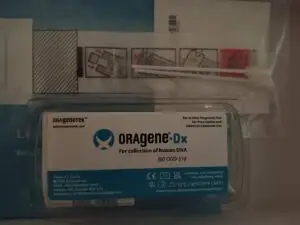
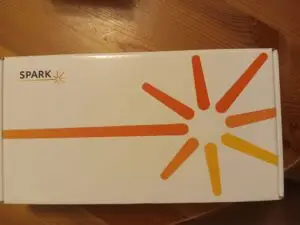
The way I found out that my child and I had this condition was through genetic testing. After my child’s autism and intellectual disability diagnoses, I signed up for Spark for Autism. Then, they sent me a “Spit Kit”, where Allie and I spit our DNA into a tube. We mailed it and didn’t hear anything for two years.
Then, one day, I got emails and phone calls saying they had found something in both Allie and my spit!
Thankfully, Spark and Simon Searchlight arranged for us to talk to a genetic counselor on a video chat to discuss the diagnosis. It was also completely free for us, which I’m so thankful for.
Talking to your doctor would be the first step if you are thinking about genetic testing.
Prognosis & Future
That all depends on the type of symptoms and severity. It will differ from person to person. For example, I have autism, ADHD, curvature of fifth finger, mood disorders, and a prominent forehead. However, my IQ is normal and while I struggled in life, I made it through okay.
However, Allie is different. She has an intellectual disability, autism, ADHD, GI issues, hypotonia, scoliosis, and a lot of other challenges. Right now, her future still remains unclear but I’m still optimistic.
However, knowing we have Chromosome 15q13.3 Microdeletion Syndrome helps explain “why” we are like this. Instead of thinking I’m wrong, a mess, or defective, I now realize it’s just a chromosome thing! So, this diagnosis has been a gift to me.
Check out this sparkly blog post!