Glowing Wood & Soul Possession: Why Mulberry Is My Favorite to Carve
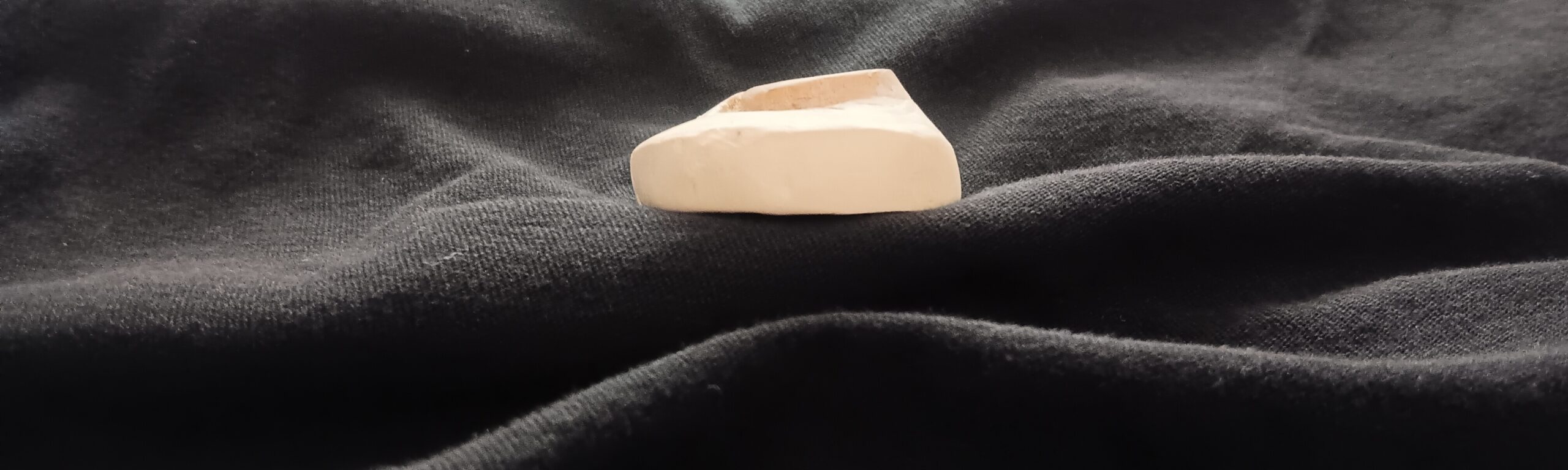
Mulberry woodcarving is one of my favorite hobbies. I try to carve at least once a week, but usually end up doing it more! I am a pretty new woodcarver, but my primary focus is on mulberry. It is a medium-hard wood. I know people say beginners should start with basswood, but that grain and I do not get along at all! So, let’s get started talking about all the reasons I love carving with mulberry, and I’ll explain that neon yellow glow as well!
Beginning Woodcarving
When I first started woodcarving, everything I read told me to start with basswood. It’s a soft wood, just perfect for beginners, all the sites claimed. I didn’t buy any basswood as there were a few pieces included in the carving knife set I bought off Amazon. Well, I tried the basswood and hated it. Maybe it’s good for other beginners, but we did not get along at all. I very quickly abandoned the basswood to carve mulberry branches from my yard.
Honestly, my best advice to others wanting to start carving is just to do it. Pick up a branch and just start whittling. You will get a feel pretty quickly on which directions to carve as well as which woods you prefer to work with. While I dislike basswood a lot, it might be great for others. Vice versa, I love mulberry, but it is a harder wood, which might be difficult for other people.
One reason I prefer working with mulberry is that it’s the first thing I tried to carve. It was lying in the yard, and I just picked it up and started whittling away. So, to go from a medium-hard wood like that to basswood was difficult for me. The other reason I need a harder wood is that I tend to put too much pressure on anything I touch. It’s part of my Chromosome 15q13.3 Microdeletion Syndrome. So, for people like me, those who naturally touch things very roughly, we need a harder wood to put up with our abuse.
Neon Yellow & Green Glow
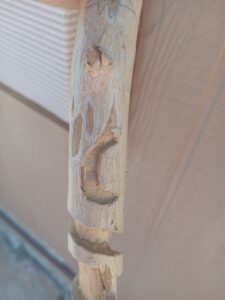
Next, let’s talk about how gorgeous mulberry is. With the bark on or with it off, it’s a beautiful and stunning wood. When I first started carving, I made a “Commander Staff.” It’s just a fancier way of saying walking stick. However, I started to notice how different each layer looked. There were streaks of electric yellow and neon green. ( wish I would have taken a picture then, but I just didn’t think about it. It is definitely on my to-do list for next time, though!)
By the time I was done with the main branch, I could see spots that made the stick look like aged bone. That’s even before we put on any natural colors or sealing oils!
Dry vs Wet Wood
Mulberry, you can actually carve when it’s dry or wet. By wet, I don’t mean dripping water, but that it’s not thoroughly dry yet. Just because it looks dry on the outside doesn’t mean it is the same inside. I’ve started carving things only to discover that it’s still green inside. While some people prefer “wet” mulberry, I like mine dry. It can take several months, sometimes over a year to get a mulberry branch to thoroughly dry out, so be patient! You can do the “thump” test, which is what I do.
Mulberry Grain Structure
Now let’s move on to the structure of mulberry. This wood typically has a straight pattern. I’ve heard of wavy grain directions, but I personally haven’t seen it yet. I really like that the grain is straight, as it makes it easier to figure out which direction to carve.
Grooved Landscape
As for the texture, it is considered medium-to-coarse. It is a non-porous wood, but there is also a big difference between earlywood and latewood. There will be a distinct “landscape” when sanded down. You can actually see this in the Moon Anxiety Palm Stone I’m currently carving for a friend. I’m clearly not done; I’m only on the first part of sanding, but you can see the way the wood is sloped in the photo below. It’s a beautiful sloping or groove before the sanding, and it really gives whatever piece you are working on some character. I only use hand tools, but I’m sure those who use Dremels or power tools could make it even. I think that would ruin Mulberry’s natural character and unique beauty, though.
As for the lines, I want to show you how gorgeous the mulberry looks between carving and sanding. It really is such a smooth wood, which contrasts with its rough bark. If you follow the grain, you will see gorgeous lines and curves like these. Don’t judge me too harshly on the piece below, as I’m still working on it!
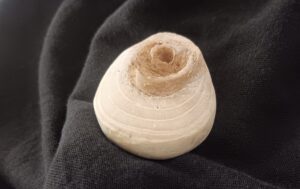
Mulberry has a high natural luster. When it’s oiled and sealed, it can almost shimmer. If the wood is fresher, it can appear yellow or even a golden brown. However, as the wood ages and gets exposed to UV light, the grain darkens to a reddish-brown or even a russet color. As it matures, the grain lines become more prominent. This is important to people like me, who have a love affair with Mulberry’s grain lines.
Spiritual & Cultural Associations
-
Protection
There are some spiritual associations with mulberry, but I’m just going to focus on the wood itself. For one thing, mulberry is considered grounding and protective. I actually learned that after I made my Commander Staff. Maybe that is why I was so drawn to it in the first place.
The wood is considered blessed in parts of the Middle East and Mediterranean. Sometimes, amulets or small carvings from mulberry are worn for protection and longevity.
-
Soul Possession (not what you think LOL)
In Central Asia, the Dutar (a traditional two-stringed lute) is almost always made from mulberry. In their culture, it is said that the mulberry wood possesses a soul. If I have the story right, when a tree lives for a century, it can hear everything, including the secrets of people sitting below. When a carver starts working on the wood, it “wakes it up.” Apparently, the wood tells stories through music, which I found so fascinating and beautiful.
-
Resiliant & Flexible
Mulberry can be resilient when dry, but flexible when steamed. That symbolizes that it easily adapts. This wood is often used in rituals that center on weathering the storm. I do know when I’m at my altar and pound my commander staff into the ground, I do feel very powerful!
Speaking of powerful, mulberry was used in ancient times to make archery bows. One could say that the wood can help you direct and launch your goals.
-
Container for Change
Mulberry wood supports silkworms, and it is considered the “Skeleton of Transformation.” The wood also represents the container for change. Boxes or containers holding sacred or blessed objects were often made from mulberry.
-
Magickal Tools
In witchcraft and neo-Pagan practices, mulberry is often used for crafting tools. A mulberry wand is made to master divine timing or patience. While some woods are for “active defense,” mulberry is more for “preventative shielding.”
What makes mulberry even better is that it’s all over my yard! We have two male trees in the front yard, and when the branches get pruned, I take my picking! Which is your favorite kind of wood to carve with? Let me know in the comments!
Check out this sparkly blog post!